Starting a gym for the first time can feel confusing. You may not know which exercises to do, how to use gym equipment, how much weight to lift, or how many days you should work out.
If you are wondering how to start gym as a beginner, you don’t need an advanced workout plan or years of fitness experience. You can begin with simple exercises, learn proper form, follow a realistic routine, and gradually improve your strength and fitness.
This complete guide explains how to start gym as a beginner, what to do during your first workout, which exercises to consider, how often to train, what to eat, and which common mistakes to avoid.
1. Set Your Fitness Goal Before Going to the Gym
The first step in learning how to start gym as a beginner is deciding what you want to achieve.
Your goal could be:
- Lose body fat
- Build muscle
- Improve strength
- Increase stamina
- Improve overall fitness
- Become more physically active
Your fitness goal can influence your workout routine, nutrition, and training schedule.
Don’t worry if your goal changes later. You can adjust your routine as your fitness level improves.
2. What Should a Beginner Take to the Gym?
You don’t need a lot of expensive equipment when you’re starting.
A basic gym bag can include:
- Comfortable workout clothes
- Proper training shoes
- Water bottle
- Small towel
- Gym bag
- Phone or headphones
- Personal hygiene items
You can also use a notebook or fitness app to record your exercises, repetitions, weights, and workout dates.
Do Beginners Need Expensive Gym Accessories?
No. Expensive accessories aren’t necessary when you’re learning the basics.
Focus on learning exercises correctly and developing a consistent workout habit.
3. What to Do on Your First Day at the Gym
Your first day doesn’t need to be an intense workout.
Knowing what to do on your first day is an important part of how to start gym as a beginner.
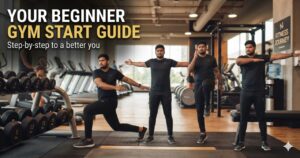
Follow these simple steps.
Step 1: Get Familiar With the Gym
Take a few minutes to understand where the cardio machines, weight machines, free weights, changing rooms, and other facilities are located.
Step 2: Talk to the Trainer
If you’re unfamiliar with an exercise machine, ask a trainer to explain how it works.
Learning the correct setup can help you use the equipment properly.
Step 3: Warm Up
Start with around 5–10 minutes of light activity, such as walking or cycling.
Step 4: Start With Basic Exercises
Choose simple exercises that work different muscle groups.
Step 5: Use Manageable Resistance
Don’t try to lift very heavy weights on your first day.
Choose a weight that allows you to perform the exercise with controlled movement and proper technique.
Step 6: Cool Down
Finish your workout with light movement and gentle stretching if appropriate.
4. Beginner Gym Workout Routine
One of the most common questions beginners have is what exercises they should actually do.
A simple full-body workout can help you learn basic movement patterns and build confidence in the gym.


Here is an example beginner gym workout routine:
| Exercise | Beginner Starting Point |
|---|---|
| Treadmill walking | 5–10 minutes |
| Bodyweight squats | 8–12 repetitions |
| Machine chest press | 8–12 repetitions |
| Lat pulldown | 8–12 repetitions |
| Seated row | 8–12 repetitions |
| Leg press | 8–12 repetitions |
| Plank | 15–30 seconds |
Start with manageable resistance and focus on learning the movement.
The exact number of sets, repetitions, and weight should be adjusted according to your fitness level and, when appropriate, guidance from a qualified trainer.
If you’re completely new to exercise, learning the correct technique is more important than lifting heavy weights.
5. How Many Days Should a Beginner Go to the Gym?
You don’t have to go to the gym seven days a week.
For many beginners, starting with three workout days per week can be a practical way to develop consistency while allowing recovery days.
For example:
| Day | Activity |
|---|---|
| Monday | Full-body workout |
| Tuesday | Rest |
| Wednesday | Full-body workout |
| Thursday | Rest |
| Friday | Full-body workout |
| Saturday | Light activity or rest |
| Sunday | Rest |
This is only an example. Your schedule can be adjusted according to your fitness level, lifestyle, and recovery.
When learning how to start gym as a beginner, remember that consistency is more important than trying to train every day.
6. How Long Should a Beginner Workout?
A beginner doesn’t need to spend several hours at the gym.
A typical beginner session can include:
- 5–10 minutes of warm-up
- 30–45 minutes of main workout
- 5–10 minutes of cool-down
Your workout duration can change as your fitness level improves.
Instead of focusing only on workout length, focus on performing exercises correctly and consistently.
A shorter workout that you can follow regularly can be more practical than an extremely long routine that is difficult to maintain.
7. How to Use Gym Equipment as a Beginner
Learning how to use gym equipment can be one of the biggest challenges during your first few sessions.
Treadmill
Start with a comfortable walking speed. Learn how to use the controls before increasing the speed or incline.
Exercise Bike
Adjust the seat so that your legs can move comfortably without excessive bending or stretching.
Leg Press
Position your feet comfortably on the platform and avoid using more weight than you can control.
Lat Pulldown
Keep your movement controlled and avoid pulling the bar aggressively.
Chest Press
Adjust the seat and handles according to the machine instructions before beginning.
Cable Machine
Start with light resistance and learn the movement before increasing the weight.
Dumbbells
Choose manageable weights and focus on controlled repetitions rather than lifting as heavy as possible.
If you’re unsure about any machine, ask a qualified trainer for assistance. Learning how to use equipment correctly is an important part of learning how to start gym as a beginner.
8. Why Proper Form Matters
Proper exercise form is an important part of learning how to start gym as a beginner.
Good technique can help you:
- Control the movement
- Target the intended muscles
- Develop better exercise habits
- Reduce unnecessary strain
- Progress more effectively
Don’t increase the weight until you can perform the movement with reasonable control.
If you aren’t sure whether your form is correct, ask a qualified trainer to check it.
Remember that lifting more weight isn’t always better. Quality of movement should come before increasing resistance.
9. What Should Beginners Eat Before the Gym?
You don’t necessarily need a complicated pre-workout meal.
Depending on your schedule and tolerance, simple options can include:
- Banana
- Oats
- Fruit and yogurt
- A light meal containing carbohydrates and protein
If you prefer exercising after a regular meal, allow enough time for digestion based on how your body feels.
There is no single pre-workout food that works for everyone.
Your overall eating pattern is more important than finding one special food before exercise.
10. What Should Beginners Eat After a Workout?
After exercising, focus on having a balanced meal that provides protein, carbohydrates, vegetables or fruit, and other nutrients your body needs.
Examples of protein-rich foods include:
- Eggs
- Chicken
- Fish
- Dal
- Paneer
- Curd or yogurt
- Milk
- Beans and legumes
You don’t need a special meal immediately after every workout. Your overall daily nutrition is more important than one individual meal.
If you’re learning how to start gym as a beginner, focus first on building healthy and sustainable eating habits rather than following complicated diets.
11. Do Beginners Need Protein Supplements?
Protein supplements are not compulsory for someone starting the gym.
Many people can get protein from foods such as eggs, dairy products, meat, fish, beans, lentils, and other protein-rich foods.
A protein supplement may be convenient for some people when meeting their dietary protein needs through food is difficult.
If you’re considering supplements, choose them according to your individual dietary requirements and, when appropriate, advice from a qualified nutrition professional.
12. Common Gym Mistakes Beginners Should Avoid
Knowing what not to do is also an important part of learning how to start gym as a beginner.
1. Lifting Too Much Weight
Don’t start with weights that you cannot control.
2. Skipping the Warm-Up
A short warm-up can help prepare you for your workout.
3. Ignoring Exercise Form
Learning correct movement patterns should come before increasing weight.
4. Copying Advanced Gym Members
An experienced person’s workout may not be appropriate for a beginner.
5. Training Without Rest
Your body needs recovery between workouts.
6. Changing Your Routine Too Frequently
Give yourself time to learn and adapt before constantly changing exercises.
7. Expecting Immediate Results
Fitness improvements take time and depend on consistency.
8. Comparing Yourself With Others
Everyone starts from a different fitness level.
9. Ignoring Sleep
Recovery is an important part of a fitness routine.
10. Trying to Do Everything at Once
Start with a manageable routine and gradually build from there.
13. How to Stay Consistent With the Gym
Starting is easy compared with staying consistent.
These simple habits can help you build a sustainable beginner gym routine.
Choose Specific Workout Days
Put your workout sessions on your weekly schedule.
Start Slowly
Don’t try to completely change your lifestyle overnight.
Track Your Progress
Record your exercises, weights, repetitions, and workout dates.
Set Small Goals
Focus on improving your technique or completing your planned workouts consistently.
Prepare Your Gym Bag
Keeping your clothes and shoes ready can make it easier to follow your routine.
Don’t Quit After Missing a Workout
Missing one session doesn’t mean you have failed. Return to your normal routine at the next opportunity.
14. When Will You See Results From Going to the Gym?
There is no exact number of days or weeks when everyone will see the same results.
Progress depends on several factors, including:
- Starting fitness level
- Workout consistency
- Nutrition
- Sleep
- Recovery
- Training program
- Individual differences
Instead of focusing only on the weighing scale, you can also track changes in strength, endurance, exercise technique, measurements, and how you feel during daily activities.
15. Beginner Gym Tips for Better Progress
Here are some simple gym tips for beginners:
- Learn the basic exercises first.
- Focus on proper form.
- Start with manageable weights.
- Increase resistance gradually.
- Stay hydrated.
- Eat a balanced diet.
- Get enough sleep.
- Take rest days.
- Track your progress.
- Be patient.
The most important thing is to choose a routine that fits your lifestyle and fitness level.
You don’t need to become an expert before starting your first workout.
Frequently Asked Questions
What should I do on my first day at the gym?
Start by getting familiar with the gym, learning how the equipment works, warming up, and performing a few basic exercises using manageable resistance.
How many days a week should a beginner go to the gym?
Three workout days per week can be a practical starting point for many beginners. Your schedule should depend on your fitness level, goals, recovery, and lifestyle.
How long should a beginner workout?
A beginner workout can often be completed in around 45–60 minutes, including warm-up and cool-down, although the ideal duration varies.
Should beginners lift weights?
Yes. Resistance training can be included in a beginner fitness program. Beginners should start with manageable resistance and prioritize proper technique.
Should I do cardio or weights first?
It depends on your goals and workout structure. If strength training is the main priority, many people perform resistance exercises before cardio. A trainer can help structure your workout according to your goals.
Can I go to the gym without knowing how to use the equipment?
Yes. Beginners can learn equipment with guidance from a qualified trainer. Don’t hesitate to ask for help when you’re unsure about an exercise or machine.
Do beginners need supplements?
No. Supplements aren’t automatically necessary when you start exercising. A balanced diet can provide many of the nutrients needed for training and recovery.
Can I lose weight by going to the gym?
Exercise can contribute to weight management, but results also depend on overall food intake, daily activity, sleep, and other individual factors.
What is the best way to start going to the gym?
Start with a realistic workout schedule, learn basic exercises, use manageable resistance, focus on proper form, and gradually increase your training as you become more comfortable.
Conclusion
Learning how to start gym as a beginner doesn’t have to be complicated.
Start with a realistic schedule, learn basic exercises, use manageable weights, focus on proper form, eat a balanced diet, and give your body enough time to recover.
You don’t need to be perfect from your first workout. The goal is to build a routine that you can maintain and improve over time.
If you’re still wondering how to start gym as a beginner, remember these five basics: start slowly, learn proper form, follow a realistic routine, recover properly, and stay consistent.
Start small, stay consistent, and improve gradually.