Social media has changed the way businesses connect with customers. From small local businesses to large companies, brands use social media to build awareness, engage with their audience, generate leads, and promote products and services.
But if you are new to social media marketing, you may have several questions. Which platform should you use? What should you post? How often should you post? How can you increase engagement? And how do you know whether your social media strategy is working?
This complete guide to social media marketing for beginners explains the basics, important platforms, content strategies, benefits, common mistakes, and practical tips you can use to build a strong social media presence.
What Is Social Media Marketing?
Social media marketing is the process of using social media platforms to promote a business, product, service, or brand and communicate with a target audience.
Businesses use platforms such as Instagram, Facebook, LinkedIn, YouTube, and other social networks to share content and connect with potential and existing customers.
Social media marketing can be used to:
- Build brand awareness
- Reach a target audience
- Increase website traffic
- Generate leads
- Promote products and services
- Increase customer engagement
- Build relationships with customers
- Support sales and business growth
However, social media marketing is more than simply publishing posts. A successful strategy requires clear goals, audience research, useful content, consistent publishing, engagement, and performance analysis.
Why Is Social Media Marketing Important?
Social media gives businesses an opportunity to communicate directly with their audience.
Instead of relying only on traditional advertising, businesses can create content, start conversations, answer questions, collect feedback, and build communities around their brands.
Here are some important benefits of social media marketing.
1. Builds Brand Awareness
Regularly sharing useful and relevant content can help people become familiar with your brand.
For example, a local beauty salon can share hairstyle ideas, beauty tips, customer transformations, service information, and special offers.
When people repeatedly see useful content from a business, they may become more familiar with the brand.
2. Helps Reach Your Target Audience
Social media platforms allow businesses to reach audiences based on factors such as interests, location, profession, age, and online behavior.
Understanding your target audience helps you create content that addresses their interests and problems.
For example, a fitness business may create workout content for people interested in health and fitness, while a B2B company may create professional and industry-focused content.
3. Increases Website Traffic
Social media can be an additional source of traffic for your website.
Businesses can share blog posts, product pages, service pages, case studies, and other useful resources on their social media profiles.
When users find the content interesting, they can visit the website to learn more.
4. Helps Generate Leads
Businesses can use social media to encourage potential customers to contact them.
Some common lead-generation methods include:
- Contact forms
- Direct messages
- WhatsApp inquiries
- Free consultations
- Downloadable guides
- Product inquiries
- Special offers
The best method depends on the business and its target audience.
5. Improves Customer Relationships
Social media provides a convenient way for businesses to communicate with customers.
Businesses can respond to comments, answer questions, provide updates, collect feedback, and address customer concerns.
This makes social media a communication channel as well as a marketing channel.
How Does Social Media Marketing Work?
A basic social media marketing strategy can be divided into several steps.
Step 1: Set Your Marketing Goals
Before creating social media content, decide what you want to achieve.
Your goals might include:
- Increasing brand awareness
- Generating leads
- Increasing website traffic
- Growing your online community
- Promoting products
- Increasing sales
- Improving customer engagement
Your goals should be clear and measurable.
For example, instead of saying:
“Get more followers.”
You could set a goal such as:
“Increase Instagram followers by 20% in three months.”
A measurable goal makes it easier to track progress.
Step 2: Identify Your Target Audience
Understanding your audience is one of the most important parts of social media marketing.
Ask yourself:
- Who are my customers?
- What problems do they have?
- What products or services do they need?
- Which social media platforms do they use?
- What type of content do they prefer?
- What questions do they frequently ask?
The answers can help you create more relevant content.
Step 3: Choose the Right Social Media Platforms
You don’t have to use every social media platform.
Instead, choose platforms that are relevant to your business and audience.
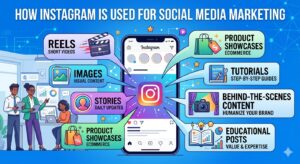
Instagram is a visual platform that can be useful for:
- Reels
- Images
- Stories
- Product showcases
- Tutorials
- Behind-the-scenes content
- Educational posts
It can be particularly useful for businesses that rely heavily on visual content.
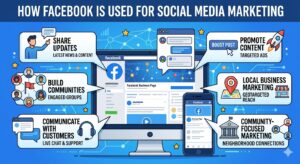
Facebook can help businesses share updates, build communities, communicate with customers, and promote content.
It can also be useful for local businesses and community-focused marketing.
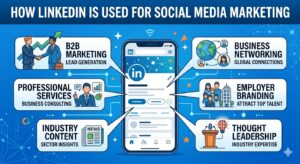
LinkedIn focuses on professional networking and can be useful for:
- B2B marketing
- Professional services
- Industry content
- Business networking
- Employer branding
- Thought leadership
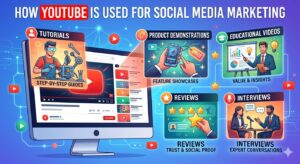
YouTube
YouTube is useful for businesses that want to create video content such as:
- Tutorials
- Product demonstrations
- Educational videos
- Reviews
- Interviews
- How-to videos
The right platform depends on your audience, content type, business goals, and available resources.
What Is a Social Media Content Strategy?
A social media content strategy is a plan for deciding what content to create, when to publish it, which platforms to use, and what you want each piece of content to achieve.
Without a strategy, businesses may end up posting random content without knowing whether it is helping them reach their goals.
A simple content strategy can include several content categories.
Educational Content
Educational content teaches your audience something useful.
Examples include:
- How-to guides
- Tips
- Tutorials
- Industry information
- Common mistakes
- Frequently asked questions
- Step-by-step instructions
Educational content can help demonstrate your knowledge and provide value to your audience.
Promotional Content
Promotional content focuses on your products or services.
Examples include:
- Discounts
- Special offers
- New products
- Service announcements
- Product features
- Seasonal promotions
However, avoid making every post promotional. A balanced content strategy should provide useful information as well as promotional messages.
Entertaining Content
Entertainment can help make your content more engaging.
Examples include:
- Memes
- Short videos
- Interesting facts
- Trends
- Light-hearted posts
- Quizzes
Make sure entertaining content remains appropriate for your brand and audience.
User-Generated Content
User-generated content is content created by customers or users about a brand.
Examples include:
- Customer reviews
- Testimonials
- Customer photos
- Product videos
- Before-and-after results
Always obtain appropriate permission before using customer-created content.
How Often Should You Post on Social Media?
There is no universal posting frequency that works for every business.
Your ideal posting schedule depends on:
- Platform
- Audience
- Business type
- Available resources
- Content quality
- Marketing goals
Instead of focusing only on posting frequently, focus on creating useful and consistent content.
A beginner can start with a simple weekly content calendar.
| Day | Suggested Content |
|---|---|
| Monday | Educational post |
| Tuesday | Short video or Reel |
| Wednesday | Industry tip |
| Thursday | Customer-focused content |
| Friday | Promotional content |
| Saturday | Behind-the-scenes content |
| Sunday | Community or engagement post |
You can analyze your results and adjust the schedule based on what works for your audience.
Social Media Marketing Tips for Beginners
If you are learning social media marketing, these practical tips can help you get started.
1. Create a Content Calendar
A content calendar helps you plan your posts before publishing them.
You can include:
- Content topic
- Platform
- Content format
- Caption
- Image or video
- Publishing date
- Call to action
Planning in advance can make social media management easier and more consistent.
2. Focus on Quality
Publishing more content does not automatically mean better results.
Your content should be:
- Useful
- Relevant
- Easy to understand
- Visually appealing
- Consistent with your brand
- Suitable for your audience
3. Use High-Quality Visuals
Images and videos play an important role in social media content.
Businesses can create:
- Social media posts
- Reels
- Stories
- Infographics
- Promotional graphics
- Educational visuals
Tools such as Canva can help beginners create professional-looking social media graphics.
4. Write Clear Captions
A good caption should explain the purpose of your content and provide useful information.
Where appropriate, finish the caption with a clear call to action.
For example:
“Want to improve your online presence? Start by optimizing your website and social media profiles. Save this post for later.”
5. Use Calls to Action
A call to action tells users what they can do next.
Examples include:
- Learn more
- Visit our website
- Contact us
- Send us a message
- Save this post
- Share this post
- Download the guide
- Book a consultation
6. Engage With Your Audience
Social media is a two-way communication channel.
Don’t only publish content. Respond to comments and messages, answer questions, and participate in relevant conversations.
7. Analyze Your Results
Social media analytics can help you understand how your content is performing.
Depending on the platform, you may be able to track:
- Reach
- Impressions
- Engagement
- Followers
- Video views
- Website clicks
- Leads
- Conversions
Use these insights to improve your future content.
Social Media Marketing vs Social Media Advertising
Social media marketing and social media advertising are related but different.
Social media marketing includes organic activities such as:
- Publishing content
- Engaging with followers
- Building communities
- Sharing educational information
- Growing brand awareness
Social media advertising involves paying to promote advertisements or content to selected audiences.
For example, a business can publish regular Instagram posts organically while also running paid advertising campaigns to reach a specific audience.
Both organic marketing and paid advertising can be included in a broader digital marketing strategy.
Common Social Media Marketing Mistakes
Beginners can make several common mistakes when starting social media marketing.
Posting Without a Strategy
Publishing random posts without clear goals can make it difficult to measure your results.
Before creating content, decide what you want the content to achieve.
Trying to Use Every Platform
Managing too many platforms can become difficult, especially for a small business.
Start with platforms that are relevant to your audience and business.
Making Every Post Promotional
If every post asks people to buy something, your audience may lose interest.
Create a balance between educational, entertaining, informative, and promotional content.
Ignoring Comments and Messages
Comments and messages are opportunities to communicate with potential and existing customers.
Ignoring them can result in missed conversations and potential business opportunities.
Not Checking Analytics
Without checking your performance data, it can be difficult to know which content is working.
Review your analytics regularly and use the information to improve your strategy.
How to Create a Simple Social Media Marketing Strategy
If you’re a beginner, you can follow this simple process.
1. Define Your Business Goal
Choose one or two primary goals for your social media activities.
2. Research Your Audience
Understand your customers, their problems, interests, preferences, and social media habits.
3. Select Relevant Platforms
Choose one to three platforms where your target audience is active.
4. Create Content Categories
Choose three to five content pillars, such as:
- Education
- Promotion
- Entertainment
- Customer stories
- Industry information
5. Build a Content Calendar
Plan your content for the upcoming week or month.
6. Publish Consistently
Follow your content schedule and maintain consistent branding.
7. Engage With Your Audience
Respond to comments, messages, questions, and relevant conversations.
8. Track Your Performance
Monitor important metrics and identify your best-performing content.
9. Improve Your Strategy
Use your data to understand what your audience responds to and adjust your future content accordingly.
Social Media Marketing for Small Businesses
Social media can provide small businesses with an additional way to communicate with customers and showcase their products or services.
For example, a local restaurant can share:
- New dishes
- Customer reviews
- Cooking videos
- Special offers
- Behind-the-scenes content
- Location information
A local salon can share:
- Hairstyle ideas
- Beauty tips
- Before-and-after transformations
- Customer testimonials
- Service information
- Seasonal offers
A real estate business could share:
- Property tours
- Market information
- Home-buying tips
- New listings
- Neighborhood information
The most useful content depends on the business, audience, location, and marketing objectives.
How Social Media Marketing Fits Into Digital Marketing
Social media marketing is one part of a broader digital marketing strategy.
Other digital marketing channels include:
- Search engine optimization (SEO)
- Search engine marketing
- Content marketing
- Email marketing
- Affiliate marketing
- Online advertising
- Conversion rate optimization
These channels can work together.
For example, a business could publish an SEO-optimized blog article, share it on social media, direct visitors to a landing page, collect leads, and follow up with email marketing.
This creates a connected digital marketing strategy instead of depending on a single marketing channel.
Frequently Asked Questions About Social Media Marketing
What is social media marketing in simple words?
Social media marketing means using social media platforms to promote a business, connect with customers, share useful content, build brand awareness, generate leads, and support business goals.
Is social media marketing suitable for beginners?
Yes. Beginners can start by learning one platform, understanding their target audience, creating useful content, and tracking basic performance metrics.
Which social media platform is best for marketing?
There is no single platform that is best for every business. The appropriate platform depends on your target audience, business type, content format, and marketing goals.
How can I learn social media marketing?
You can learn social media marketing by studying social media platforms, learning content strategy, practicing content creation, understanding analytics, and working on real-world projects.
How often should a business post on social media?
Posting frequency depends on the platform, audience, business resources, and strategy. Consistent and useful content is generally more important than simply posting as frequently as possible.
Can social media marketing increase sales?
Social media can support sales by increasing brand awareness, bringing website traffic, generating leads, building customer relationships, and promoting products or services. Results vary depending on the business, audience, offer, and strategy.
Is social media marketing part of digital marketing?
Yes. Social media marketing is one component of digital marketing, along with SEO, content marketing, email marketing, online advertising, and other digital channels.
Can small businesses use social media marketing?
Yes. Small businesses can use social media to showcase products and services, communicate with customers, build awareness, share useful content, and generate inquiries.
Conclusion
Social media marketing is an important part of modern digital marketing. It gives businesses opportunities to connect with their target audience, share valuable content, build brand awareness, generate leads, and support business growth.
If you’re a beginner, you don’t need to start on every platform at once. Begin by understanding your audience, setting clear goals, choosing relevant platforms, creating useful content, engaging with followers, and measuring your results.
The most important part is consistency. Learn from your performance data, experiment with different types of content, and improve your strategy over time.
With regular practice and a clear strategy, social media marketing can become a valuable skill for business owners, marketers, freelancers, and anyone interested in building a career in digital marketing.