Indian Classical Dance Forms: A Complete Guide to the 8 Classical Dances of India
India is a land of diverse cultures, languages, traditions, music, and art forms. Among its many cultural treasures, Indian classical dance holds a special place. These dance traditions are not simply forms of entertainment—they combine movement, music, storytelling, facial expressions, rhythm, and cultural traditions.
From the precise movements of Bharatanatyam to the graceful expressions of Mohiniyattam and the dramatic presentation of Kathakali, every classical dance form has its own history and identity.
In this article, we will explore the eight major Indian classical dance forms, their origins, characteristics, costumes, music, and cultural significance.
What Is Indian Classical Dance?
Indian classical dance refers to traditional dance forms that have developed within India’s rich artistic and cultural traditions. These dances are based on established principles of movement, rhythm, expression, music, and performance.
A major historical text associated with Indian performing arts is the Natya Shastra, traditionally attributed to Bharata Muni. It discusses various aspects of dramatic performance, including dance, music, expression, gestures, and theatre.
Indian classical dance commonly combines three important elements:
- Nritta – pure dance movements performed for rhythm and visual beauty.
- Nritya – expressive dance in which movements and facial expressions communicate meaning.
- Natya – dramatic representation or storytelling through performance.
Together, these elements allow dancers to communicate stories and emotions through their bodies, faces, gestures, and rhythm.
What Are the 8 Classical Dance Forms of India?
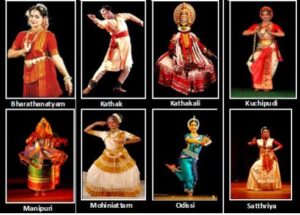
India’s eight widely recognized classical dance traditions are:
- Bharatanatyam – Tamil Nadu
- Kathak – North India
- Kathakali – Kerala
- Kuchipudi – Andhra Pradesh
- Odissi – Odisha
- Manipuri – Manipur
- Mohiniyattam – Kerala
- Sattriya – Assam
Each dance form has developed within a different regional and cultural environment, giving it distinctive movements, costumes, music, and storytelling traditions.
1. Bharatanatyam – The Classical Dance of Tamil Nadu
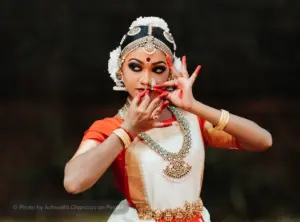
Bharatanatyam is one of India’s best-known classical dance traditions and is strongly associated with Tamil Nadu.
It is recognized for its precise movements, rhythmic footwork, expressive storytelling, and structured choreography.
History of Bharatanatyam
Bharatanatyam has historical connections with temple and performance traditions of South India. Over time, it underwent significant changes in presentation and institutional practice, particularly during the 19th and 20th centuries.
Today, Bharatanatyam is performed on stages around the world and is taught to students through systematic training.
Major Features
Bharatanatyam is known for:
- Geometric body positions
- Rhythmic footwork
- Hand gestures called mudras
- Facial expressions
- Strong connection between movement and music
- Storytelling based on traditional themes
The characteristic bent-knee posture is one of the visual features that many audiences associate with Bharatanatyam.
Costume
Bharatanatyam costumes are often inspired by traditional South Indian clothing. Dancers commonly wear specially designed costumes with pleated fabric that opens beautifully during certain movements.
Traditional jewellery, hair decorations, ankle bells, and stage makeup complete the appearance.
Music
Bharatanatyam is generally performed with Carnatic music. Instruments may include the mridangam, violin, flute, veena, and other accompanying instruments.
2. Kathak – The Dance of Storytelling
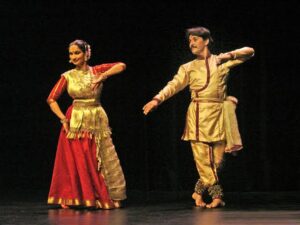
Kathak developed primarily in North India and is particularly associated with regions such as Uttar Pradesh and Rajasthan.
The word “Kathak” is connected with the Sanskrit term katha, meaning story. Storytelling is therefore an important part of the tradition.
What Makes Kathak Unique?
Kathak is famous for:
- Fast and intricate footwork
- Spins
- Rhythmic patterns
- Expressive storytelling
- Graceful movements
- Interaction with musical rhythm
Dancers wear ankle bells called ghungroo, which emphasize the rhythmic patterns created by their footwork.
Historical Development
Kathak developed through different cultural environments, including temple traditions and royal courts. Its modern presentation reflects a long history of artistic development.
Different Kathak gharanas, or stylistic schools, developed their own approaches to movement, rhythm, and presentation.
Costume
Kathak costumes vary according to presentation and tradition. Female dancers may wear flowing traditional outfits, while male dancers may wear traditional North Indian attire.
The flowing costume combined with spins creates a distinctive visual effect.
3. Kathakali – Kerala’s Dance-Drama Tradition
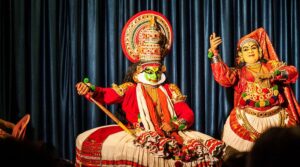
Kathakali comes from Kerala and is particularly famous for its dramatic presentation, elaborate costumes, facial expressions, and distinctive makeup.
Unlike dance forms that focus primarily on movement, Kathakali combines elements of dance, theatre, music, acting, and storytelling.
Storytelling in Kathakali
Traditional Kathakali performances often draw from stories associated with Indian epics and other traditional narratives.
Performers use:
- Hand gestures
- Facial expressions
- Eye movements
- Body movements
- Dramatic poses
to communicate characters and emotions.
Kathakali Makeup
One of Kathakali’s most recognizable features is its elaborate makeup.
Different character types traditionally have different makeup and costume conventions. The highly stylized appearance helps audiences understand the nature and role of characters.
Costume
Kathakali costumes are elaborate and theatrical, with large headpieces, colourful clothing, jewellery, and other accessories.
The visual presentation makes Kathakali immediately recognizable, even to people seeing it for the first time.
4. Kuchipudi – Andhra Pradesh’s Classical Dance
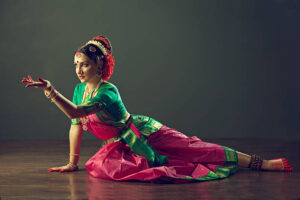
Kuchipudi originated in Andhra Pradesh and is named after the village of Kuchipudi, traditionally associated with the dance-drama tradition.
It combines graceful dance movements with expressive storytelling and theatrical elements.
Features of Kuchipudi
Kuchipudi includes:
- Rhythmic movements
- Facial expressions
- Hand gestures
- Dramatic storytelling
- Fast footwork
- Graceful movements
Traditional Kuchipudi performances can include both pure dance and narrative sections.
Theatrical Tradition
One of the interesting aspects of Kuchipudi is its connection with dance-drama.
Performers may portray different characters and communicate stories through movement and expression.
Costume
Kuchipudi costumes share some visual similarities with other South Indian classical dance costumes but have their own stylistic characteristics.
Traditional jewellery, makeup, flowers, and ankle bells are commonly part of the stage presentation.
5. Odissi – The Classical Dance of Odisha
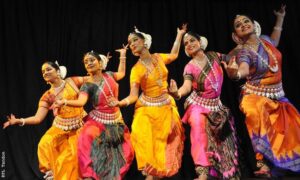
Odissi originated in Odisha and is particularly known for its graceful movements, sculptural poses, and expressive storytelling.
Its visual language has connections with the artistic traditions of Odisha, including temple sculpture and performance traditions.
Unique Features of Odissi
Odissi is known for:
- Tribhangi posture
- Chauka posture
- Graceful torso movements
- Hand gestures
- Facial expressions
- Rhythmic footwork
The Tribhangi position divides the body into three bends and is one of the recognizable features of Odissi.
Themes
Traditional Odissi repertoire includes devotional and mythological themes, with stories frequently connected to Krishna and other traditional subjects.
Costume
Odissi dancers commonly wear traditional Odisha textiles, silver jewellery, decorative hair arrangements, and ankle bells.
The costume and jewellery contribute strongly to the distinctive visual identity of Odissi.
6. Manipuri – The Graceful Dance Tradition of Manipur
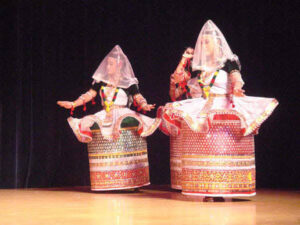
Manipuri comes from the northeastern state of Manipur.
Compared with some other classical traditions that emphasize strong rhythmic footwork, Manipuri is often recognized for its soft, flowing, and graceful movements.
Themes of Manipuri Dance
Manipuri has strong connections with the Vaishnavite traditions of the region.
Performances may portray stories associated with Radha and Krishna, including the famous Ras traditions.
Characteristics
Manipuri is known for:
- Smooth movements
- Graceful gestures
- Circular patterns
- Expressive storytelling
- Traditional music
- Devotional themes
Costume
The traditional costumes of Manipuri dance are visually distinctive. Female performers in Ras traditions may wear elaborate cylindrical skirts and traditional ornaments.
The costume contributes to the graceful appearance of the performance.
7. Mohiniyattam – The Graceful Dance of Kerala
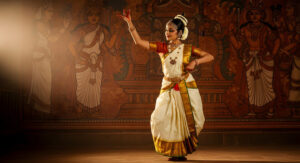
Mohiniyattam is another classical dance tradition from Kerala.
The name is associated with Mohini, the enchanting female form of Vishnu in Hindu mythology.
The dance is often characterized by gentle movements, flowing gestures, and expressive storytelling.
Characteristics of Mohiniyattam
Some of its recognizable qualities include:
- Soft and graceful movements
- Swaying body movements
- Expressive facial expressions
- Hand gestures
- Traditional music
- Narrative and devotional themes
The overall performance emphasizes elegance and fluidity.
Costume
The traditional costume is generally associated with Kerala’s visual culture and commonly features white or off-white fabric with a distinctive border.
Traditional jewellery and hair decoration complete the appearance.
8. Sattriya – Assam’s Classical Dance Tradition
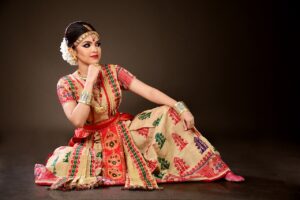
Sattriya originated in Assam and has strong connections with the Vaishnavite cultural traditions associated with Srimanta Sankardeva.
It developed within the sattra institutional tradition and later became widely recognized as a classical dance form.
Characteristics of Sattriya
Sattriya combines:
- Dance
- Music
- Drama
- Storytelling
- Expressive gestures
- Rhythmic movements
Traditional performances often present stories and devotional themes.
Costume
Sattriya costumes reflect the textile and artistic traditions of Assam.
The visual design, ornaments, and traditional textiles contribute to the unique identity of the dance.
The Importance of Mudras in Indian Classical Dance
One of the fascinating elements of Indian classical dance is the use of mudras, or hand gestures.
Dancers can use specific gestures to represent objects, people, actions, ideas, or emotions.
For example, depending on the dance tradition and context, a hand gesture may help represent:
- A flower
- A bird
- A person
- A river
- An emotion
- An action
- A character
Mudras become especially powerful when combined with facial expressions, body movements, music, and storytelling.
Rather than simply moving to music, the dancer can use these elements to communicate an entire scene.
The Role of Facial Expressions
Indian classical dance places great importance on expression.
A dancer can communicate emotions such as:
- Love
- Happiness
- Sadness
- Anger
- Fear
- Wonder
- Compassion
- Courage
through facial expressions and controlled movements.
This expressive component is often called abhinaya.
The eyes, eyebrows, facial muscles, hands, and body work together to communicate meaning.
This is one reason Indian classical dance can tell stories even when the performer is not speaking.
Music and Rhythm in Indian Classical Dance
Dance and music are closely connected in Indian classical performance traditions.
The dancer follows rhythmic structures while responding to musical compositions and vocal or instrumental accompaniment.
Different dance traditions are associated with different musical systems and regional performance practices.
For example:
- Bharatanatyam is closely connected with Carnatic music.
- Kathak is commonly associated with Hindustani music.
- Different regional instruments and musical traditions accompany other classical forms.
Tala, or rhythmic cycle, is particularly important in many Indian performance traditions.
The dancer’s footwork, gestures, and movements can interact with the rhythm to create complex patterns.
Indian Classical Dance Costumes and Jewellery
Costumes are an important part of classical dance because they enhance the visual storytelling of a performance.
Traditional costumes can help establish:
- Regional identity
- Character
- Cultural background
- Performance style
- Visual symbolism
Jewellery is also an important component.
Depending on the dance form, performers may wear:
- Head ornaments
- Earrings
- Necklaces
- Bangles
- Waist belts
- Anklets
- Hair decorations
Ankle bells, particularly, are strongly associated with several Indian classical dance traditions and help emphasize rhythmic footwork.
Indian Classical Dance vs Folk Dance
Indian classical dance and Indian folk dance are both important parts of India’s cultural heritage, but they have different characteristics.
Classical Dance
Classical traditions generally have established technical systems involving movement, rhythm, expression, and performance structure.
Examples include:
- Bharatanatyam
- Kathak
- Kuchipudi
- Odissi
Folk Dance
Folk dances are generally connected with the everyday cultural traditions and celebrations of particular communities or regions.
Examples include:
- Garba
- Bhangra
- Ghoomar
- Bihu
- Lavani
The two categories are not competitors. Together, they demonstrate India’s enormous cultural diversity.
Why Indian Classical Dance Is Important
Indian classical dance plays an important role in preserving cultural heritage.
It helps pass traditions from one generation to another and provides a way for stories, music, artistic practices, and regional identities to continue.
1. Preserving Culture
Dance keeps traditional artistic practices alive.
2. Storytelling
Classical dance provides a powerful way to communicate traditional stories and ideas.
3. Connecting Generations
Young dancers learn techniques and traditions from teachers and pass them forward.
4. Global Recognition
Indian classical dancers perform internationally, introducing audiences around the world to India’s cultural heritage.
5. Artistic Expression
Dance allows performers to communicate emotions and ideas through movement, music, and expression.
Indian Classical Dance in the Modern Era
Indian classical dance has evolved while maintaining connections with its traditional foundations.
Today, dancers perform classical pieces on traditional stages as well as in cultural festivals, educational institutions, theatres, and digital platforms.
Social media and online video platforms have also made classical dance more accessible to younger audiences.
At the same time, dancers and teachers continue to discuss an important question: How can traditional dance evolve while respecting its heritage?
This balance between tradition and innovation is likely to remain an important part of the future of Indian classical dance.
Famous Indian Classical Dancers
India has produced many influential dancers and teachers who have helped popularize classical dance in India and internationally.
Some well-known names include:
- Rukmini Devi Arundale
- Birju Maharaj
- Yamini Krishnamurti
- Sonal Mansingh
- Kelucharan Mohapatra
- Vempati Chinna Satyam
- Guru Bipin Singh
These artists contributed to the teaching, performance, preservation, and development of Indian dance traditions.
How to Start Learning Indian Classical Dance
If you are interested in learning a classical dance form, choosing the right tradition is a good first step.
Consider:
Choose a Dance Form
Learn about different traditions and choose one that interests you.
Find a Qualified Teacher
Classical dance requires proper guidance, especially when learning posture, rhythm, gestures, and technique.
Learn the Basics
Beginners generally spend considerable time learning fundamental movements and positions before progressing to more complex choreography.
Practice Regularly
Consistency is important because classical dance involves coordination, rhythm, memory, and physical technique.
Learn the Culture
Understanding the stories, music, terminology, and traditions behind the dance can make learning more meaningful.
Frequently Asked Questions
How many classical dance forms are there in India?
India is widely recognized as having eight major classical dance forms: Bharatanatyam, Kathak, Kathakali, Kuchipudi, Odissi, Manipuri, Mohiniyattam, and Sattriya.
Which is the oldest classical dance form in India?
It is difficult to identify one classical dance as simply “the oldest.” Indian dance traditions have developed over long periods and have undergone significant changes throughout history.
Which classical dance originated in Andhra Pradesh?
Kuchipudi is the classical dance tradition associated with Andhra Pradesh.
Which classical dance is associated with Tamil Nadu?
Bharatanatyam is strongly associated with Tamil Nadu.
Which classical dances originated in Kerala?
Kathakali and Mohiniyattam are the two major classical dance traditions associated with Kerala.
Which classical dance originated in Assam?
Sattriya originated in Assam.
Why are mudras important in Indian classical dance?
Mudras help dancers communicate ideas, objects, actions, characters, and emotions through symbolic hand gestures.
Conclusion
Indian classical dance is much more than a sequence of movements. It is a combination of history, culture, music, rhythm, storytelling, expression, and artistic discipline.
The eight major classical dance traditions—Bharatanatyam, Kathak, Kathakali, Kuchipudi, Odissi, Manipuri, Mohiniyattam, and Sattriya—each offer a different window into India’s diverse cultural heritage.
From the rhythmic footwork of Kathak to the sculptural movements of Odissi and the expressive storytelling of Bharatanatyam and Kuchipudi, every tradition has its own language.
Learning about these dances allows us to understand not only Indian performing arts but also the stories, communities, traditions, and artistic ideas that have shaped India’s cultural identity over generations.
Indian classical dance is a living tradition—and its story continues with every dancer who learns, performs, teaches, and passes it forward.